Creativity as a Leadership Discipline
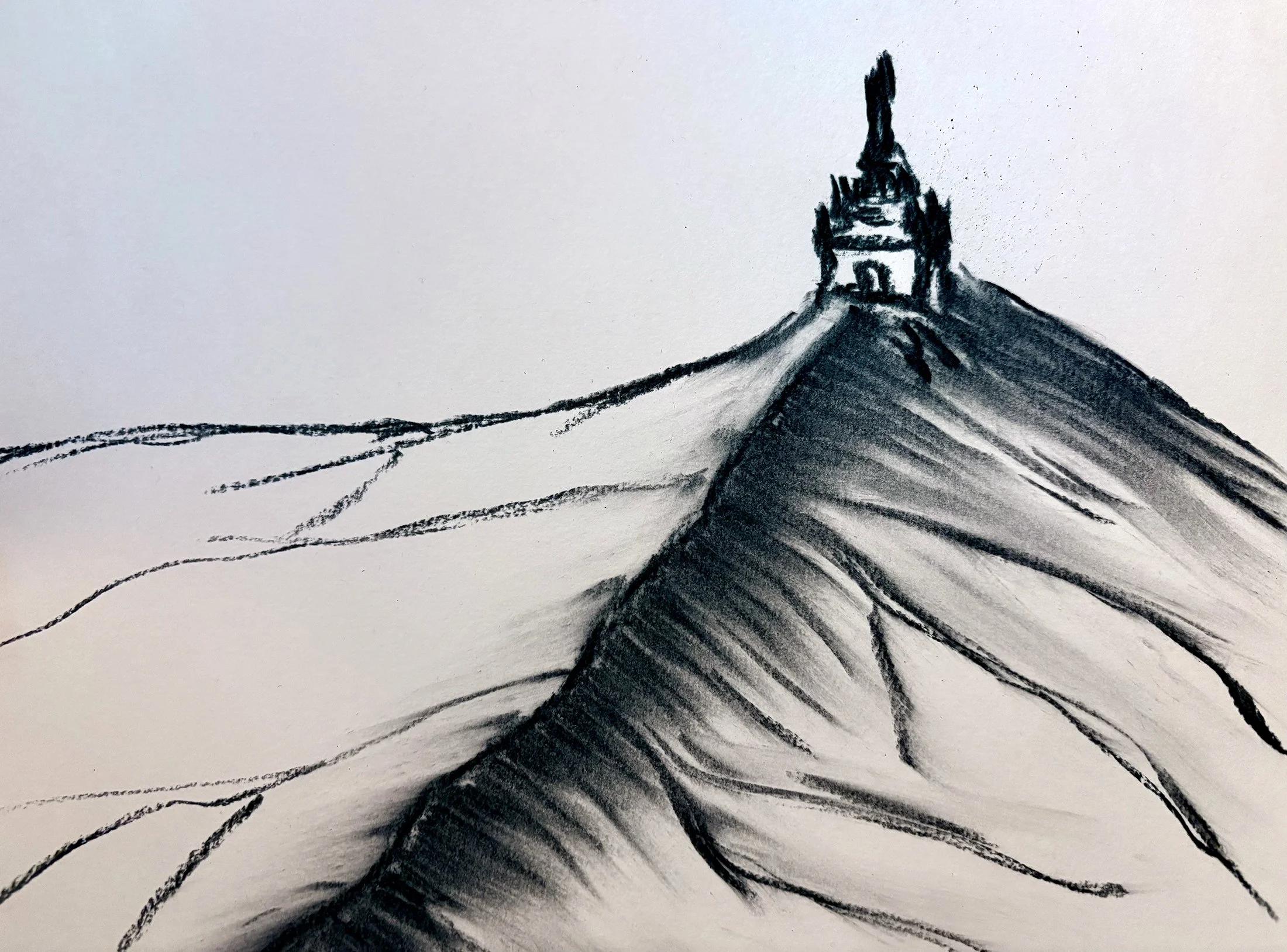
Drawing by Yury Li-Toroptsov © 2026
Leadership is evolving faster than the frameworks designed to support it, as artificial intelligence accelerates analysis, scales execution, and increases operational efficiency while leaving untouched the deeper question of meaning and responsibility in decision making. In complex and volatile environments, the quality of leadership no longer depends primarily on processing information faster, but on the ability to see situations clearly, set direction with intent, and stand behind decisions once they are made.
Complex challenges resist linear answers and standard playbooks, requiring from leaders a sharper quality of perception, sustained attention to human and systemic dynamics, and the capacity to produce meaning under conditions of uncertainty and pressure. When familiar reference points weaken or collapse, the objective is not speed for its own sake, but clarity, coherence, and judgment that hold over time.
This is where creativity becomes a leadership discipline.
I work with senior leaders and leadership teams facing moments where traditional analytical tools no longer provide sufficient leverage, such as deep organizational transformation, persistent relational tensions, strategic drift, or recurring patterns of indecision. My approach rests on three foundations. Systemic coaching helps map interactions, feedback loops, and unintended consequences. Jungian psychology supports work on leadership posture, projections, and blind spots. Visual thinking methods drawn from artistic practice make complex dynamics visible when language alone proves insufficient.
Image-based work plays a central role in this process. An image does not provide solutions or prescriptions, but it forces sustained attention and interrupts habitual patterns of judgment. It slows reflexive reactions, reveals contradictions and misalignments, and brings unspoken tensions into view. Through this reflective space, leaders examine how they perceive situations, how they assign value and priority, and how these perceptions shape their decisions. This shift in perspective alters the quality of dialogue and deepens the level at which decisions are formed.
This work treats creativity neither as atmosphere nor as occasional inspiration, but as a demanding discipline of leadership practice. It develops attention, sharpens perception, and strengthens responsibility. Leaders learn to hold ambiguity without paralysis, to distinguish genuine urgency from ambient pressure, and to engage their teams in conversations of higher quality, grounded in action, ownership, and accountability.
In an environment increasingly shaped by automation, creativity remains a uniquely human space of decision. It involves judgment, the production of meaning, and the capacity to connect elements that do not naturally align, while assuming responsibility without full certainty. Systems support, suggest, and optimize, yet the final decision remains a human act that defines leadership.
The effects of this work appear directly in daily operations. Priorities become clearer, recurring blockages lose their grip, and decisions shift away from constant reaction toward a more stable coherence between intent, posture, and action. Teams recognize this coherence quickly, and it strengthens trust as well as the collective ability to act over time.
This approach speaks to organizations willing to think with rigor, practice leadership as an embodied responsibility, and operate with depth inside complex systems. Where tools reach their limits, discernment begins. Creativity is not an accessory to leadership. It becomes one of its core disciplines.