When images think before we do: art, perception, and transformation in coaching
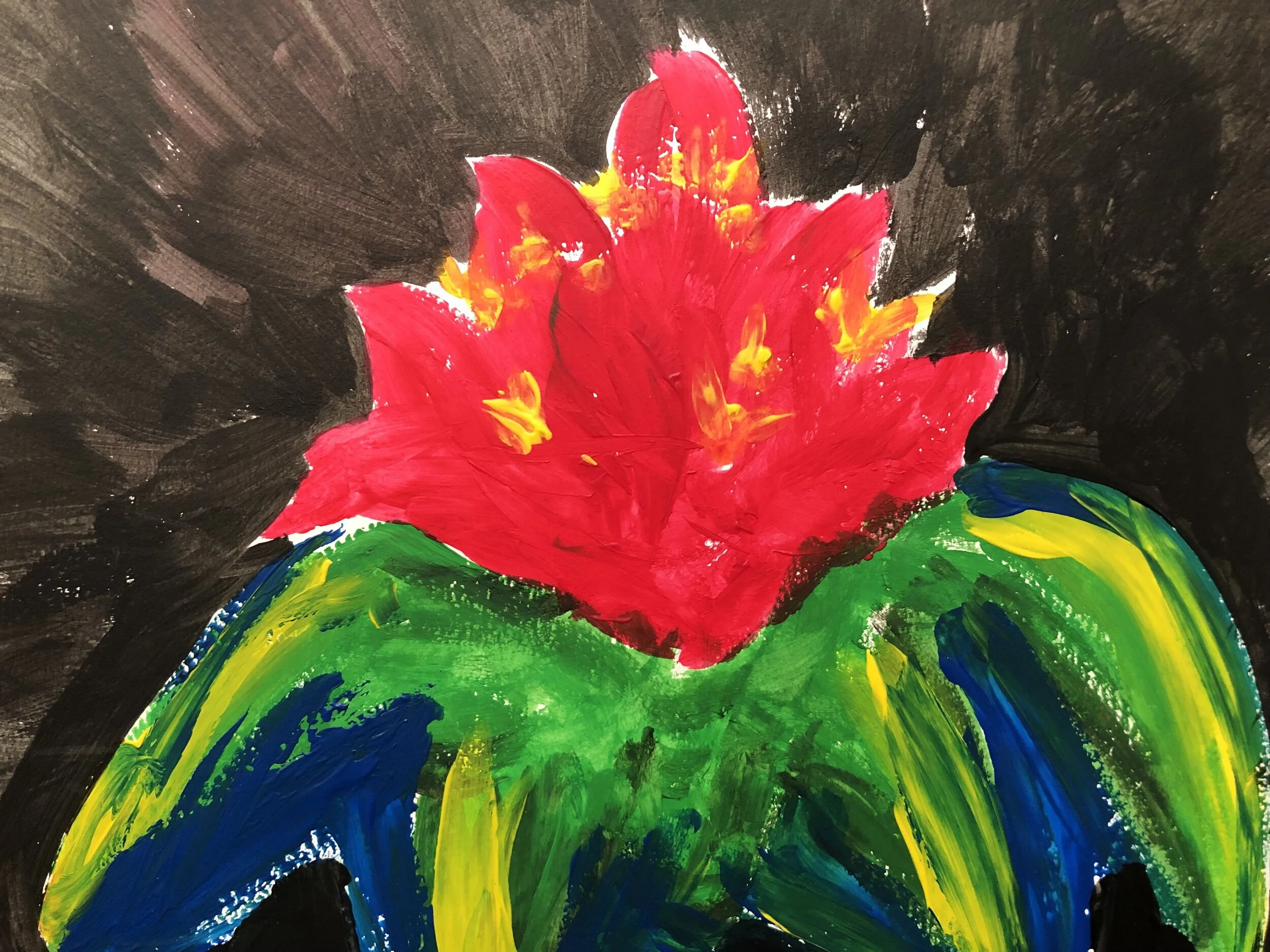
Drawing © Yury Li-Toroptsov
There are moments in coaching when language reaches its limit, when the client explains, clarifies, reformulates, and still circles around something that refuses to become clear, as if the problem itself resists being reduced to words, and it is often precisely at that point that an image, whether a photograph taken on the way to the session or a quick drawing made without preparation, opens a path that had remained closed despite careful analysis.
My work did not begin with a theory about art in coaching, it began with a practice, first as a photographer and visual artist, long before I trained as a coach, and over time I noticed that images do not only represent reality, they organize perception, they reveal tensions, they condense contradictions, and they hold together elements that language tends to separate, which led me, quite naturally, to bring them into coaching conversations where clients were struggling with complexity, ambiguity, or internal conflict.
In early sessions, I would sometimes ask a client to bring a photograph that mattered to them, without overexplaining why, and what I observed repeatedly was that the conversation shifted in quality, because instead of speaking about a situation in abstract terms, the client was now looking at something, describing what they saw, reacting to details, noticing what drew their attention and what they avoided, and through this process, patterns emerged that had not been accessible through verbal reflection alone.
Photography, in this context, works as a mirror that does not reflect the person directly but reflects their way of seeing, their choices of framing, distance, light, subject, and omission, and each of these choices carries meaning, not as a fixed interpretation imposed from outside, but as a field of exploration where the client can test hypotheses, question assumptions, and gradually refine their perception.
Spontaneous drawing plays a different but complementary role, because it bypasses the expectation of producing something “good” or “beautiful” and instead invites gesture, movement, and immediacy, so that what appears on the page often surprises the person who made it, and this surprise is not anecdotal, it signals that something has been expressed without being filtered through habitual narratives, which creates an opening for new understanding.
The role of art in personal transformation, within a coaching framework, is therefore not decorative and not illustrative, it is operational, because it changes how a situation is perceived, and when perception changes, decision changes, and when decision changes, action follows, which is why I often say that the work is less about producing insight in the abstract and more about reorganizing perception in a way that makes action possible.
This approach is consistent with what is now being explored in the field often referred to as neuroarts, where researchers study how engagement with artistic processes affects the brain, cognition, and emotional regulation, and while the field is still developing, several findings are relevant to coaching practice, for example that creative expression activates distributed neural networks rather than isolated regions, which supports integration across emotional, sensory, and cognitive domains, or that engaging in artistic activity can reduce stress markers and increase flexibility in thinking, both of which are directly linked to better decision making in complex environments.
Studies in neuroaesthetics also suggest that ambiguity in images, rather than being a problem, is precisely what stimulates deeper processing, because the brain is invited to resolve or at least engage with multiple possible interpretations, and this aligns with what happens in sessions where a client looks at an image and initially says “I do not know what this is about,” only to discover, through sustained attention, that the image contains several layers of meaning that resonate with their situation.
My integration of art into coaching became more deliberate over time, as I trained in systemic coaching and deepened my exposure to analytical psychology, because both perspectives emphasize that what drives behavior is often not immediately visible and that patterns operate across levels, relational, symbolic, and perceptual, and art provides a way to access these patterns without forcing them into premature clarity.
In practice, this means that a session might move between looking at an image, describing it in concrete terms, associating freely to its elements, linking these associations to current challenges, and then translating what has been seen into a decision or an experiment in action, so that the process remains grounded and does not drift into abstraction.
The fact that this has become a signature of my work is not the result of positioning alone, it is the consequence of coherence between my background as an artist and my role as a coach, because I do not introduce art as an external technique but as a language I have practiced for years, and clients sense this, which creates trust in the process even when it is unfamiliar.
There is also a pragmatic dimension to this approach, because many of the people I work with operate in environments where complexity, uncertainty, and pressure are high, and where traditional analytical tools reach their limits, so offering them a way to see differently is not a luxury, it is a necessity, and art, in this sense, becomes a discipline of perception rather than an escape from reality.
What matters, finally, is not the image itself but what it makes possible, the shift from a fixed narrative to a more nuanced view, the emergence of a detail that changes the whole, the recognition of a pattern that had remained implicit, and the capacity to act with greater clarity, which is, after all, the core objective of coaching.