
Team & Corporate Work
Team coaching, leadership development workshops, and art based strategy sessions for organizations in Paris. Strengthen collaboration, leadership, and strategic thinking.
Leadership Development, Team Coaching, and Creative Strategy for Organizations
Organizations face complex environments. Strategy shifts quickly. Teams operate across cultures, disciplines, and time zones. Many leadership challenges arise from invisible dynamics inside teams rather than technical problems.
I work with companies in Paris and internationally to support leaders and teams facing such situations. My interventions combine professional coaching, systemic thinking, and visual analysis to create new perspectives on leadership, collaboration, and decision making.
This work supports organizations during moments of transition, strategic reflection, or leadership development.
Situations Where Companies Seek Support
Organizations often reach out when teams encounter situations such as:
leadership transitions
post merger integration
organizational restructuring
team misalignment or communication breakdown
strategic uncertainty
leadership development for high potential managers
cross cultural management challenges
In these situations, analytical discussion alone rarely shifts behavior. Structured coaching combined with visual reflection helps teams observe patterns, assumptions, and dynamics in new ways.
Core Interventions
These core interventions include team coaching, leadership development workshops, and strategic reflection sessions for organizations and leadership teams in Paris and internationally.
-
Team coaching focuses on how a group works together in real situations.
Key areas include:
improving team communication
clarifying roles and expectations
strengthening trust and cooperation
aligning team members around strategic objectives
supporting newly formed leadership teams
Sessions often combine dialogue, systemic observation, and visual reflection exercises.
-
Art based sessions use works of art and image analysis as tools for strategic reflection.
Images stimulate perception and interpretation. When teams observe the same image together, different interpretations appear. These differences often mirror organizational dynamics.
This method helps teams:
explore complex problems from new angles
identify hidden assumptions
improve collective decision making
strengthen creative thinking
Sessions often take place in workshop settings or cultural environments such as museums.
Learn more
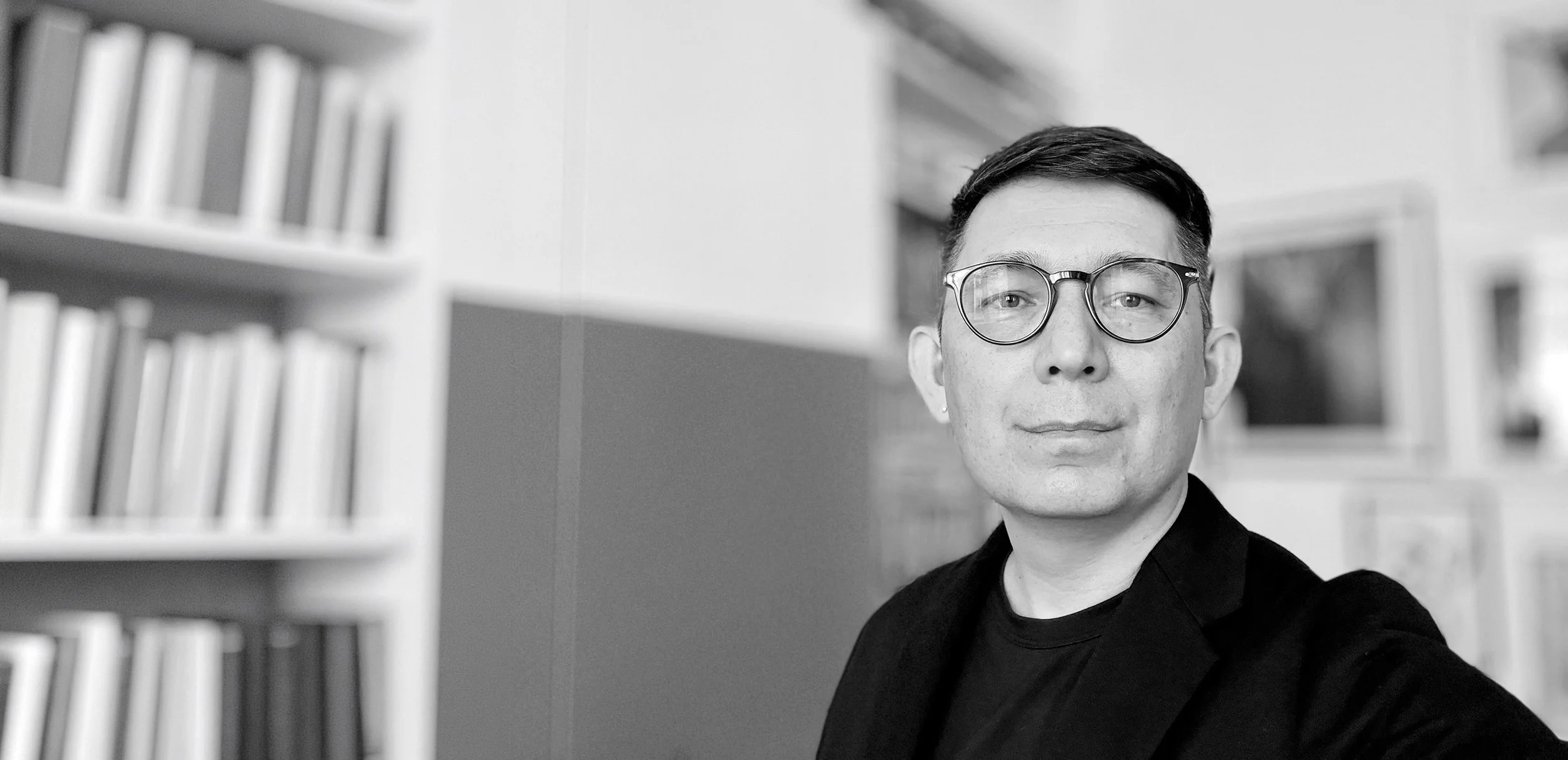
Why I Bring Art Into Organizational Work
My work with teams and organizations began with a simple observation.
Companies invest heavily in data, strategy frameworks, and analytical tools. Yet many leadership problems arise from something more basic. People do not always see the situation in front of them in the same way. Teams interpret signals differently. Important patterns remain unnoticed.
Art trains perception.
As a photographer, I spent years studying composition, tension, rhythm, and balance inside images. These principles also appear inside organizations. Teams form patterns. Decisions follow implicit structures. Leadership dynamics create visible and invisible lines of force.
When leaders sharpen their perception, conversations change. Strategy becomes clearer. Teams make stronger decisions.
Today this capacity matters even more. Artificial intelligence generates analysis, forecasts, and information at unprecedented scale. The real competitive advantage shifts toward something else. Human interpretation, judgment, and imagination.
This insight led me to bring artistic methods into professional coaching and leadership development. Images create a shared field of observation. They slow automatic reactions. People notice different aspects of the same situation and begin to think together.
In complex environments, this shift in perception changes how teams work.
I collaborate with organizations that want their leaders to approach uncertainty with clarity, creativity, and collective intelligence. Art becomes a structured tool for reflection, dialogue, and strategic insight.
The arts remain one of the most underused resources in business performance. Combined with coaching and systemic thinking, they open perspectives traditional training rarely reaches.
Method
My work integrates three complementary perspectives. This combination encourages both analytical clarity and creative insight. This work supports organizations during moments of transition, strategic reflection, or leadership development.
Systemic Perspective
Organizations function through networks of relationships, expectations, and implicit rules. A systemic perspective examines how these elements influence leadership and collaboration.
Symbolic and Psychological Perspective
Analytical psychology developed by Carl Gustav Jung studies how images and symbols reflect deeper psychological processes. Symbolic reflection helps leaders understand motivations, tensions, and meaning within teams.
Visual Perception
Images influence how people perceive situations. Structured image analysis helps reveal aspects of a problem which remain invisible in purely verbal discussions.
Clients


Format of Interventions
Interventions adapt to organizational needs. Possible formats include:
half day workshops
one day leadership seminars
multi session team coaching programs
strategic reflection sessions for leadership teams
individual executive coaching combined with team work
Sessions take place in Paris or online.
Who This Work Serves
This work supports:
leadership teams
managers responsible for strategic projects
cross functional teams
organizations facing transformation or uncertainty
Participants often come from international and multicultural professional environments.
Benefits for Organizations
Organizations working through these programs often report:
improved leadership communication
stronger team cohesion
clearer strategic conversations
increased creative thinking
better understanding of team dynamics
These outcomes strengthen leadership capacity and decision making.
Connection with Coaching
Corporate interventions often connect with individual coaching.
Leaders participating in team programs sometimes pursue executive coaching to deepen their work on leadership posture, decision making, and strategic perspective.
Professional Background

Yury Li-Toroptsov
Certified Professional Coach | Artist | Jungian analyst-in-training
I am a certified professional coach accredited by the EMCC, and I accompany individuals seeking greater clarity, confidence, and meaning in their personal or professional lives.
My clients include senior executives in established organisations as well as individuals engaged in personal development processes. They share a common need for perspective, balance, and informed decision making in situations of transition, uncertainty, or change.
Certified in Coaching, Leadership and Change by ESSEC Business School in Paris, I draw on more than 25 years of experience as a visual artist and photographer, alongside advanced training in Jungian psychology. My coaching approach integrates systemic thinking in order to identify and shift recurring relational or behavioural patterns, psychodynamic insight to support reflective self awareness, and creative methods as structured tools for perspective taking and action.
Coaching sessions are conducted within a defined professional framework that supports goal clarification, skill development, and effective decision making. Coaching is provided within a non therapeutic context and does not replace psychotherapy, psychiatric care, or medical treatment. When issues fall outside the scope of coaching, referral to appropriate qualified healthcare professionals is recommended in accordance with the EMCC Global Code of Ethics.
My training
Now Jungian analyst-in-training, CG Jung Institute Zurich, Küsnacht, Switzerland
2024 Certificate of Fundamentals of Analytical Psychology, CG Jung Institute Zurich, Küsnacht, Switzerland
2021 Advanced certificate in Coaching, Leadership & Change, ESSEC Business School, Paris, France. Thesis: "Coaching by image, a tool for transforming managerial practices in the era of hybrid work".
2000 MS in Non-Profit Management, New School for Social Research, NY, USA
1997 Diploma in English Philology, Far Eastern Federal University, Vladivostok, Russia
Languages spoken
English, French, Russian

I have just returned from a retreat at Belloc Abbey, picturesquely located in the Basque Country, where Espace Jungien Francophone held its first colloquium dedicated to artificial intelligence and depth psychology. I had the honour of giving an experiential workshop there, and this work confirmed once again a conviction that has become central to my practice: we need to do more group work today, not because groups are simple or naturally harmonious, but because the collective space around us has become so inflamed that we need smaller places where people can still speak, listen and remain in relation.