The Art of Collaborating: how art-based approaches and image-based work strengthen collaboration within leadership teams and executive committees.
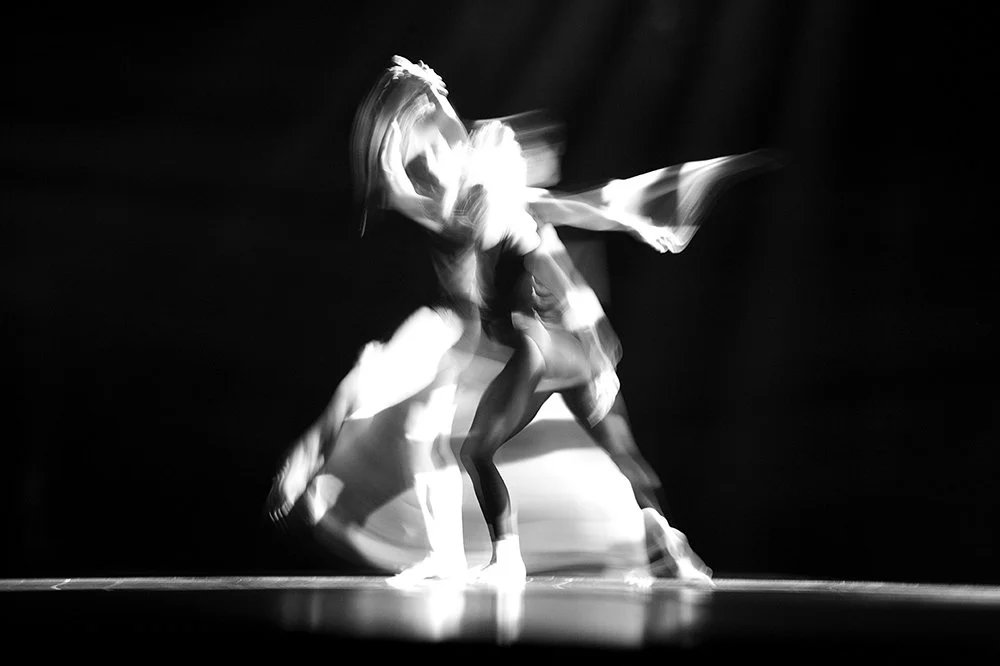
Photo © Yury Li-Toroptsov
A leadership team of eight executives contacted me a few months ago. Some had recently stepped into new positions, while others had worked together for years without ever truly meeting each other beyond the pressures and routines of everyday corporate life. They shared the same strategic challenges, the same collective responsibilities, and the same business objectives, yet they sensed that something was still missing for them to function as a real leadership team.
Very quickly, the conversation moved beyond organizational charts and processes. Their question was not technical. It was human. How do you learn to know each other better without falling into artificial team-building exercises or predictable corporate retreats? How do you gain insight into each person’s values, ways of thinking, expectations, or tensions when the pace of the company constantly pushes everyone toward action, operational decisions, and urgency? How do you build trust without forcing intimacy?
It was in this context that they invited me to facilitate a half-day workshop based on image-based and art-based methods.
What interests me in these situations is that they often reveal a very accurate intuition on the part of the executives themselves. Many leaders today sense that collaboration no longer depends solely on technical expertise or clear role distribution. In complex environments, the quality of perception becomes central. Two people may sit in the same meeting, hear the exact same information, and yet understand the situation in radically different ways. These differences in perception later generate misunderstandings, tensions, poorly coordinated decisions, or subtle forms of mistrust that gradually slow the collective down.
Working with images acts precisely at this level.
When a group stands in front of an artwork, a photograph, or a visual exercise, something shifts in the way people look and listen. Conversations become less immediately defensive. Participants no longer speak only from their professional role or area of expertise. They also reveal a way of observing, associating, and making meaning. This opens a space that differs from ordinary meetings, a space where people begin to perceive dimensions of their colleagues that had previously remained invisible.
Within this leadership team, some participants discovered that the executive they had perceived as cold or highly analytical was in fact deeply concerned with group cohesion and the long-term stability of the company. Another person, usually quiet during meetings, revealed a remarkable depth of perception and reflection that the group had never fully recognized. Roles slowly began to lose some of their rigidity. The people behind the functions started to reappear.
This shift in perception often produces highly concrete effects. Conversations become more nuanced. Disagreements feel less personal. Participants gain a clearer understanding of each other’s actual constraints and begin interpreting certain behaviors differently, behaviors that had previously generated irritation or mistrust. The objective is not to eliminate tensions or differences, but to create conditions where these tensions become more visible and therefore easier to navigate collectively.
Art has a particular function here, one that companies still largely underestimate. It is not merely a tool for inspiration, entertainment, or superficial creativity. It acts as a way of refining perception. It teaches people to slow down their gaze, tolerate multiple interpretations simultaneously, and observe before drawing conclusions too quickly. These capacities are deeply connected to leadership quality and collaborative intelligence.
In many leadership teams, difficulties do not arise from a lack of intelligence or competence. They emerge because people gradually begin perceiving each other through rigid categories. One person becomes “the finance person.” Another becomes “the creative one.” Someone else becomes “the difficult one” or “the operational one.” Once these representations harden, collaboration narrows. People progressively stop truly seeing each other.
Working with images reintroduces movement into these representations.
Because an artwork never delivers a single immediate meaning, it forces each participant to become aware of their own way of seeing. And when this experience is shared collectively, it also becomes a way of discovering how others construct their perception of the world. Experiences of this kind often generate more mutual understanding than long theoretical discussions about communication or corporate values.
I am always struck by how quickly certain groups evolve once they begin looking together differently. In only a few hours, a collective can rediscover curiosity about itself. Interactions become less mechanical. People listen differently. Another quality of presence begins to emerge.
In an era saturated with information, meetings, and rapid decision-making, the capacity to perceive others more accurately becomes a strategic issue. Collaboration is not simply about coordinating tasks or aligning objectives. It also requires developing an intelligence of perception, an ability to understand what lies behind positions, reactions, and silences.
Art offers a particularly powerful ground for this work because it bypasses certain automatisms of professional life. It creates another way of approaching what often remains difficult to express directly. And it reminds us of something essential: before learning to work better together, people often need to learn how to see together differently.
***
Are you looking to create a different kind of working space for your executive committee, leadership team, or senior management group?
I work with organizations through image-based and art-based approaches designed to strengthen dialogue, mutual understanding, and collective intelligence in complex environments.
These interventions may take the form of a one-time workshop, a strategic seminar, or a targeted team session, but they can also unfold over several months or throughout an entire year in order to support deeper collective transformation over time.
Each format is designed specifically for leadership teams, executive retreats, and organizational transformation contexts.
To discuss your situation or imagine a workshop adapted to your team, book your discovery call now.