How Jungian Psychology Applies to Leadership Coaching
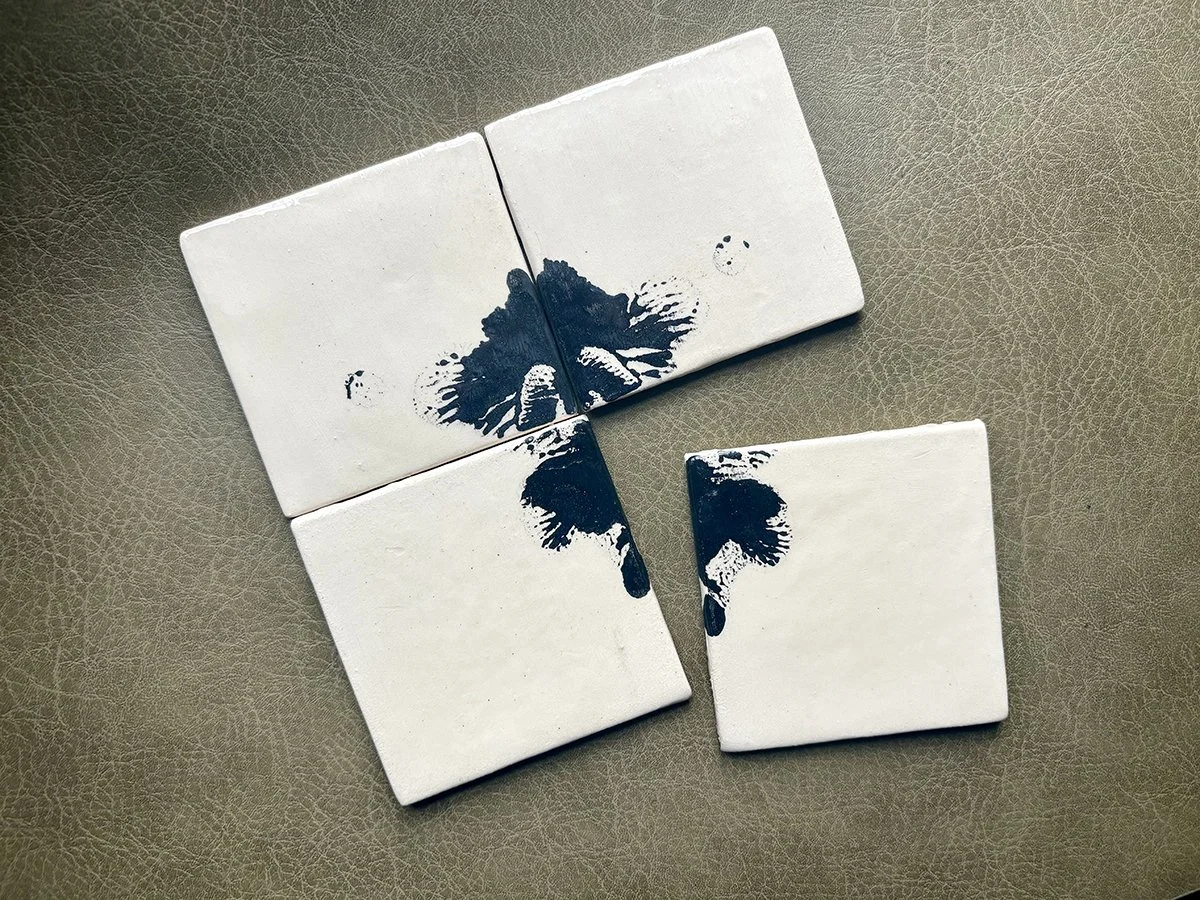
Photo © Yury Li-Toroptsov
Leadership coaching has evolved considerably over the past decade. Today, many leaders are no longer looking only for performance optimization or communication techniques. They are looking for ways to better understand the complexity of the human systems in which they operate. Because leadership is rarely only about strategy.
A leadership situation often contains multiple layers operating simultaneously. There are objectives, deadlines, reporting structures, and operational decisions, of course. But there are also tensions, perceptions, projections, alliances, anxieties, unspoken expectations, symbolic roles, and collective emotional climates that shape how individuals and teams function together.
This is where Jungian psychology brings a particularly valuable contribution to leadership coaching.
Rooted in the work of Carl Gustav Jung, Jungian psychology does not stand in opposition to strategic or operational thinking. It functions as an additional lens through which leadership situations can be observed. Certain tensions, repetitions, resistances, or group dynamics become easier to perceive once viewed through this broader psychological perspective.
In practice, this often allows leaders to approach complexity with greater clarity and depth.
Leadership as a Dynamic Process
One of the central ideas Jungian psychology brings to leadership coaching is the understanding that leadership is not static. It is dynamic.
A leader is constantly interacting with a wider system composed of individuals, teams, histories, expectations, cultures, and organizational narratives. What appears at the surface level is often only part of what is shaping a situation.
For example, a leadership team may repeatedly recreate the same conflict despite structural changes. A highly competent executive may struggle with visibility or authority at decisive moments. A company may publicly encourage innovation while unconsciously discouraging risk-taking internally.
Seen only operationally, these situations may appear confusing or irrational.
Viewed through a Jungian lens, they often begin to reveal recognizable patterns.
Jungian psychology pays attention to what repeats, what remains emotionally charged, what becomes symbolic inside an organization, and what roles individuals unconsciously occupy within a group dynamic. It enlarges the field of observation.
That broader panorama can become extremely useful for leaders because perception influences action. The more accurately a leader perceives the forces at work within a situation, the more precisely decisions can be made.
The Emerging Field of Jungian Coaching
An emerging field often referred to as Jungian coaching or depth-oriented leadership coaching has developed at the intersection of analytical psychology, leadership development, and systems thinking.
Its objective is not psychotherapy. The focus remains firmly connected to leadership, professional development, organizational dynamics, and decision making. What changes is the depth of observation.
Jungian-informed coaching invites leaders to look beyond immediate reactions and examine the larger patterns shaping a situation. It introduces questions that traditional leadership approaches do not always explore fully:
What dynamics repeatedly emerge within this team?
What role has a leader unconsciously come to embody inside an organization?
What tensions remain unspoken but continue to influence behavior?
What collective fears or expectations shape resistance to change?
What symbolic meaning has become attached to a project, a transition, or a leadership position?
These questions are not abstract philosophical exercises. They often lead to highly concrete operational insights.
Because organizations are human systems before they are purely organizational systems.
Why This Perspective Matters in Leadership Coaching
Many leadership difficulties are not caused by a lack of intelligence, competence, or strategy. Often, leaders already possess significant expertise. What becomes difficult is maintaining perspective inside complex relational environments where multiple forces interact simultaneously. Jungian psychology helps widen that perspective.
It offers leaders a structured way of observing the emotional, symbolic, and relational dimensions of organizational life without losing sight of practical objectives. It helps identify patterns that remain difficult to detect when attention is focused only on immediate outcomes or surface behaviors. This does not replace systemic analysis, operational thinking, or business strategy. It complements them.
A leader who begins to recognize projection dynamics inside a team often communicates differently. A company that better understands its internal relationship to uncertainty may structure transformation processes more effectively. An executive who recognizes recurring personal patterns may approach authority, visibility, or decision making with greater flexibility.
The objective is always practical application. Insight alone is not enough. Leadership coaching must ultimately help translate perception into action.
From Broader Perception to Operational Clarity
One of the misconceptions sometimes associated with Jungian psychology is that it remains too theoretical for organizational environments. In effective coaching practice, the opposite is often true.
A broader understanding of the forces operating inside a situation frequently leads to more grounded decisions. Leaders become less reactive and more capable of distinguishing between immediate noise and deeper structural dynamics. This movement matters.
First, the situation is observed more fully. Then, that expanded understanding is translated into operational choices, communication strategies, leadership positioning, or organizational interventions. The process remains concrete. Jungian psychology simply enlarges the map before action is taken.
My Approach
As an executive and systemic coach based in Paris and a Training Candidate at the C. G. Jung Institute Zurich, I integrate Jungian perspectives into leadership coaching within a clearly defined professional coaching framework.
My approach combines systemic coaching, symbolic thinking, and visual reflection through my method Coaching par l’Image®.
What interests me is helping leaders perceive situations more broadly before moving toward operational decisions. Because in complex organizational environments, leadership often depends less on reacting faster than on seeing more accurately.
Jungian psychology offers one possible way of expanding that perception. And in many leadership situations, that shift in perception changes everything.